
Here’s the short answer. Local SEO for veterinarians is the work that puts your clinic in the Google map pack when a pet owner nearby searches “vet near me”, “cat vaccinations” or “emergency vet open now”. It comes down to five jobs: a clean Google Business Profile for the clinic and its vets, opening hours that tell the truth about emergencies, a website page for each service and each kind of visit, a steady flow of genuine reviews from every client, and review replies that never reveal anything from a pet’s record.
I do local SEO and Google Business Profile work for small businesses. Vet clinics have rules of their own, so this is the checklist I use for them. It follows the same pattern as my guides for dentists and chiropractors, with extra care on emergency hours, client confidentiality and honest wording.
Why local SEO for veterinarians is different
Four things make this niche its own case:
- There are two kinds of search. A planned visit (vaccines, a check-up, dental cleaning) and an emergency at 11 PM need different answers from your profile and website.
- Clinics and vets can both have profiles. Google’s rules for individual practitioners, like doctors and dentists, can apply to veterinarians too. Set this up wrong and you get duplicate or competing listings.
- Client information is confidential. HIPAA covers human health information, but state law and the profession’s ethics still protect pet records and client details.
- Some words are restricted. The American Veterinary Medical Association (AVMA) keeps the word “specialist” for board-certified vets.
How Google ranks vet clinics in the map pack
Google’s local ranking tips say local results are mainly based on relevance, distance and prominence. The same page says there is no way to request or pay for a better local ranking. For a vet clinic it means:
- Relevance: how well your profile and website match the search. The right category, accurate hours and a page for each main service help.
- Distance: how far the clinic is from the searcher. You cannot change it honestly.
- Prominence: how well known you are. Google names links to your business and the number of reviews and positive ratings as part of it.
Google also says complete, accurate profiles are more likely to show up. For a vet, the detail that matters most is your hours.
Wellness searches vs emergency searches
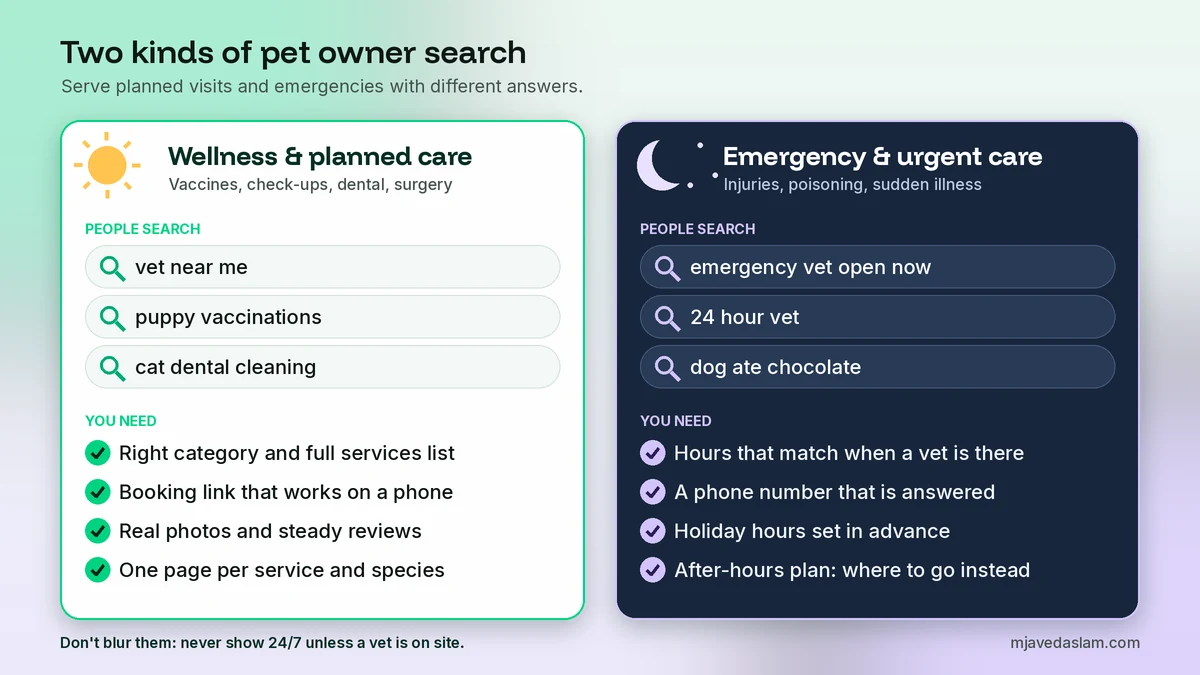
This is the part most vet SEO guides skip. Pet owners search in two moods, and you need to serve both. Here is how I split the work:
| Wellness and planned care | Emergency and urgent care | |
|---|---|---|
| Typical searches | “vet near me”, “puppy vaccinations”, “cat dental cleaning”, “spay cost” + town | “emergency vet”, “24 hour vet”, “vet open now”, “dog ate chocolate” |
| What the owner needs | Trust, services, prices or how to ask, booking | Is someone there right now, how far is it, what number to call |
| Profile settings that matter | Category, services, booking link, photos, reviews | Accurate hours, holiday hours, phone number that is answered |
| Website page | One page per service and per species you treat | One emergency page with hours, phone, address and what to do after hours |
| Mistake to avoid | Thin pages that list services with no detail | Saying “24/7” when no vet is on site at night |
If your clinic does not see emergencies, say so clearly and tell owners where to go instead. That is also what the AVMA asks of vets, as you will see below.
Set up the clinic’s Google Business Profile
Work through these fields in order. It is the same list I use in my Google Business Profile service, with the vet points added.
Business name: only the real name
Google’s guidelines for representing your business say your name must match the real-world name used on your sign, website and stationery. Service words, location words and hours information are not allowed in the name, and Google even gives “Regal Pizzeria Open 24 hours” as an example of what not to do. So “Riverbend Animal Hospital” is fine if that is your sign. “Riverbend Animal Hospital 24/7 Emergency Vet” is not, and it can get the profile suspended. My Business Profile name guidelines post covers the edge cases.
Primary and secondary categories
Google asks you to use as few categories as possible and to choose ones that complete the sentence “this business IS a”, not “this business HAS a”. The list includes Veterinarian, Animal hospital and Emergency veterinarian service. Pick the one that best describes the whole clinic as your primary category. Only add Emergency veterinarian service if you really treat emergencies during the hours you show. Do not add Pet groomer just because you trim nails. My guide to the primary category explains how to choose.
Run a separate grooming or boarding brand at the same address? If it operates independently, Google’s guidelines allow it a profile of its own. If it is just a clinic service, list it under services.
Hours that tell the truth
Google asks for your regular customer-facing hours, plus special hours for holidays. My rules for vets:
- Choose Open 24 hours only if a vet is on site and able to see an animal at any time. A phone that forwards to a mobile is not 24-hour care.
- If you close at night, show your real closing time and put your after-hours plan on your website and in your phone message.
- Set holiday hours before every public holiday. My guide to Google Business Profile holiday hours shows how.
The AVMA’s Principles of Veterinary Medical Ethics say that when a veterinarian is not available, they should make a good faith effort to give clients readily accessible information to help them get emergency services. In SEO terms, your website should say exactly where to go after hours, with the address and phone number of the nearest emergency hospital.
Services, description and booking
- Services: add each real service as its own line: wellness exams, vaccinations, microchipping, dental care, surgery, senior pet care. If you see birds, rabbits or reptiles, say so.
- Description: plain English about which animals you treat, your main services, your vets and whether you see emergencies. The guidelines do not allow links, prices or sale offers in the description. My guide to the Business Profile description has examples.
- Booking: if you take online bookings, add the link and test it on a phone. Keep emergencies out of the booking form and point them to a phone call.
Photos owners trust
Show the building and entrance, the waiting area, exam rooms, your team and the parking. Real photos beat stock images. Get written permission before posting a client’s pet with anything that could identify the owner. My photo guidelines cover sizes and what Google rejects.
Clinic profile vs vet profiles
Google’s guidelines have a section on individual practitioners. They name doctors, dentists and lawyers as examples, and the same logic fits vets who see clients directly. Here is how it plays out:
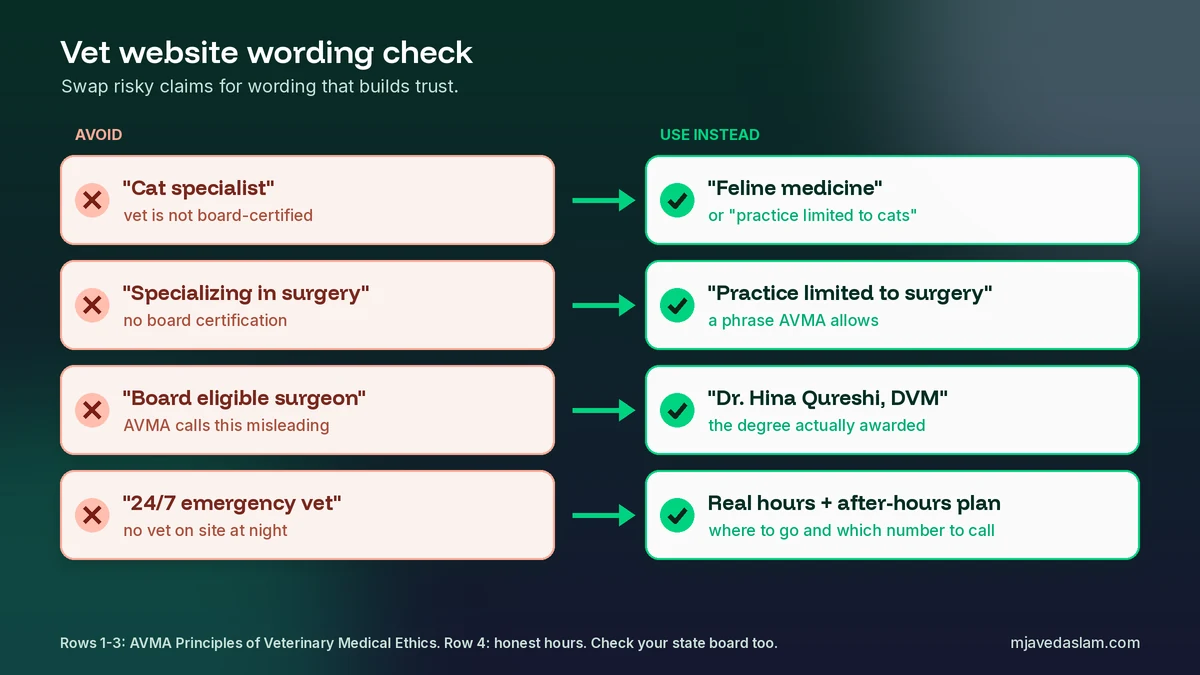
- Several vets at one clinic: the clinic has its own profile. Each vet who sees clients may also have one, named only with their own name, such as “Dr. Hina Qureshi”, if clients can contact them there during the stated hours.
- One vet in a branded clinic: Google says it’s best to share one profile, named in the format [brand]: [practitioner name], for example “Riverbend Animal Hospital: Dr. Hina Qureshi”.
- Support staff: vet nurses, technicians and the front desk team should not have their own profiles.
- No extra profiles per area of interest, and no second clinic profile. My guide to fix a duplicate Google Business Profile shows the clean-up.
In my experience, many clinics do better with one strong clinic profile. Vet profiles split your reviews and need upkeep whenever someone joins or leaves.
Build service, species and emergency pages
Your website is where you win the “service + town” searches. I build four kinds of page for vet clinics:
- One page per main service and per type of animal. Vaccinations, dental care, surgery; dogs, cats, exotics if you truly treat them. Say who it is for, what happens and how to book.
- An emergency page. Whether you see emergencies, when, the phone number, and where to go when you are closed. Let your vets approve any “when to call” advice.
- A new client page. What to bring, how long the first visit takes, payment basics and parking.
- A page for each vet. Real name, photo, degree, focus areas and any board certification.
Watch the word “specialist”
The AVMA principles say the term “specialist” should be reserved for a veterinarian who is currently board-certified by a recognised specialty organisation. A vet who focuses on one area may say “practice limited to”, but should not use “specialist” or “specializing in”. “Board eligible” and “board qualified” are called misleading. So “Cat Specialist in Riverbend” is a risk unless the vet is board-certified, while “Feline medicine” is safer. The principles also say advertising must not be misleading, and that testimonials count as advertising. Check your state board’s rules too.
Then add structured data. Schema.org has a VeterinaryCare type for a vet’s office. I use it together with LocalBusiness schema, with your real name, address, phone and hours. Add a tap-to-call button on every page and use the same name, address and phone everywhere. For FAQs on service pages, see my guide to FAQ schema in WordPress.
Get reviews the right way
Reviews feed prominence, and new clients read them before they trust you with their pet. Ask every client the same way, for example in the follow-up message after a routine visit.
Google’s Maps content policy says merchants may not discourage or prohibit negative reviews, or selectively solicit positive reviews. That rules out “review gating”, where you survey clients first and only send the happy ones to Google. The same policy bans incentives such as payment, discounts or free goods and services in exchange for a review. It also says not to pressure people to review on the premises, set staff review quotas, or ask for specific content such as a vet’s name.
- Send every client the same short link, or show a Google review QR code at reception and on your follow-up emails.
- Do not offer a free nail trim, a discount on vaccines or a prize draw for reviews.
- Do not let staff or family review the clinic. Google treats conflict-of-interest reviews as rating manipulation.
- Be gentle with timing. Never send an automatic review request after a euthanasia or the loss of a pet.
Reply to reviews without breaking confidentiality
Google lists replying to reviews among its local ranking tips. But a careless reply can break client confidentiality. The AVMA principles say the information in veterinary medical records is confidential and must not be released except as required or allowed by law, or with client consent. Several states also put this into law. California’s Business and Professions Code section 4857, for example, says a licensed vet shall not disclose information about an animal patient, the client or the care provided, except in listed cases such as client consent or a court order.
So even when a client tells their pet’s story in a review, do not answer with details from the record. My rules:
- Do not mention a diagnosis, treatment, test result, bill or visit, do not use the pet’s name, and do not confirm the reviewer is a client.
- Thank people for positive reviews in general terms. “Thank you, our team loves seeing happy, healthy pets” is enough.
- For negative reviews, stay calm, say you take concerns seriously and invite the person to call the practice manager. Take the details offline.
- Write a short reply policy for everyone who replies on Google. This is practical advice, not legal advice, so check your state rules.
A safe reply to a negative review: “Thank you for your feedback. We take every concern seriously, but to protect client confidentiality we can’t discuss any details here. Please call our practice manager on our main number so we can listen and help.” My review response templates have more examples you can adapt.
Ads and tracking
Local SEO takes months. Search ads can fill gaps sooner, such as a new clinic or a new dental service. Keep the radius tight with Google Ads location targeting, run emergency ads only during hours you can really answer, and read my guide to Google Ads costs for small businesses before you set a budget. My Google Ads service covers the full setup.
Each month, check calls, website clicks and direction requests in your Business Profile insights, and add UTM tracking to your profile links so profile visits show clearly in Google Analytics. Many calls at night tell you about after-hours demand.
A 30-day local SEO plan for a vet clinic
- Week 1: audit every clinic and vet profile. Fix the name, merge duplicates, and set the right category, address and honest hours, including holiday hours.
- Week 2: add every real service, write a description that says whether you see emergencies, add the booking link and upload real photos.
- Week 3: publish your emergency page, top three service pages, new client page and vet pages. Remove “specialist” wording not backed by board certification. Add schema.
- Week 4: start asking every client for a review the same way, write your reply policy, and use it on existing reviews.
After that, local SEO for veterinarians is mostly routine: add one new service page a month, post updates (my Business Profile posts guide has ideas) and keep the review routine going. For citations and local links, see my local SEO service.
FAQ: local SEO for veterinarians
What is local SEO for veterinarians?
It is the work that helps a vet clinic appear in the Google map pack when pet owners nearby search for a vet, a service such as vaccinations, or emergency care. It covers a Google Business Profile with honest hours, service and emergency pages, genuine reviews and replies that keep client information confidential.
What Google Business Profile category should a vet clinic use?
Choose the category that best describes the whole clinic, such as Veterinarian or Animal hospital, from the list Google offers in your country. Google asks you to use as few categories as possible and to pick ones that complete the sentence “this business IS a”. Only add Emergency veterinarian service if you really treat emergencies during the hours you show.
Should a vet clinic set its hours to Open 24 hours?
Only if a veterinarian is on site and able to see an animal at any time. If you close at night, show your real hours and tell owners on your website and phone message where to go after hours.
Can a vet clinic offer a discount for Google reviews?
No. Google’s Maps content policy bans incentives such as payment, discounts or free goods and services in exchange for reviews. It also bans asking only happy clients to review, known as review gating. Ask every client the same way, without pressure or rewards.
Does HIPAA apply to veterinarians replying to reviews?
HIPAA covers human health information, but vets still have a duty of confidentiality. The AVMA’s ethics principles say veterinary medical records are confidential, and many states have their own laws, such as California’s Business and Professions Code section 4857. Keep replies general, do not confirm the reviewer is a client, and take the details offline.
Can a veterinarian call themselves a specialist on their website?
Only if they are currently board-certified by a recognised veterinary specialty organisation. The AVMA principles say vets who focus on one area may use the phrase “practice limited to” but should not use “specialist” or “specializing in”, and should not use “board eligible” or “board qualified”. Check your state board’s advertising rules too.
Next step
Start with your hours and your profile this week: the real clinic name, the right category, honest emergency hours and a clear after-hours plan on your website. Then write your review reply policy before you answer the next review. If you want me to check your profiles, pages and reviews, see my Google Business Profile service or my wider local SEO work.