

Local SEO for HVAC companies isn’t a mysterious seasonal spell — it’s showing up when homeowners search “AC repair near me,” “furnace not heating,” or “heat pump install [city]” with a complete Google Business Profile, honest service pages, and reviews that prove you fix systems for a living. Google’s local results lean on relevance, distance and prominence. You can’t buy a Map Pack slot; you can stop leaking trust with thin pages and a half-empty profile.
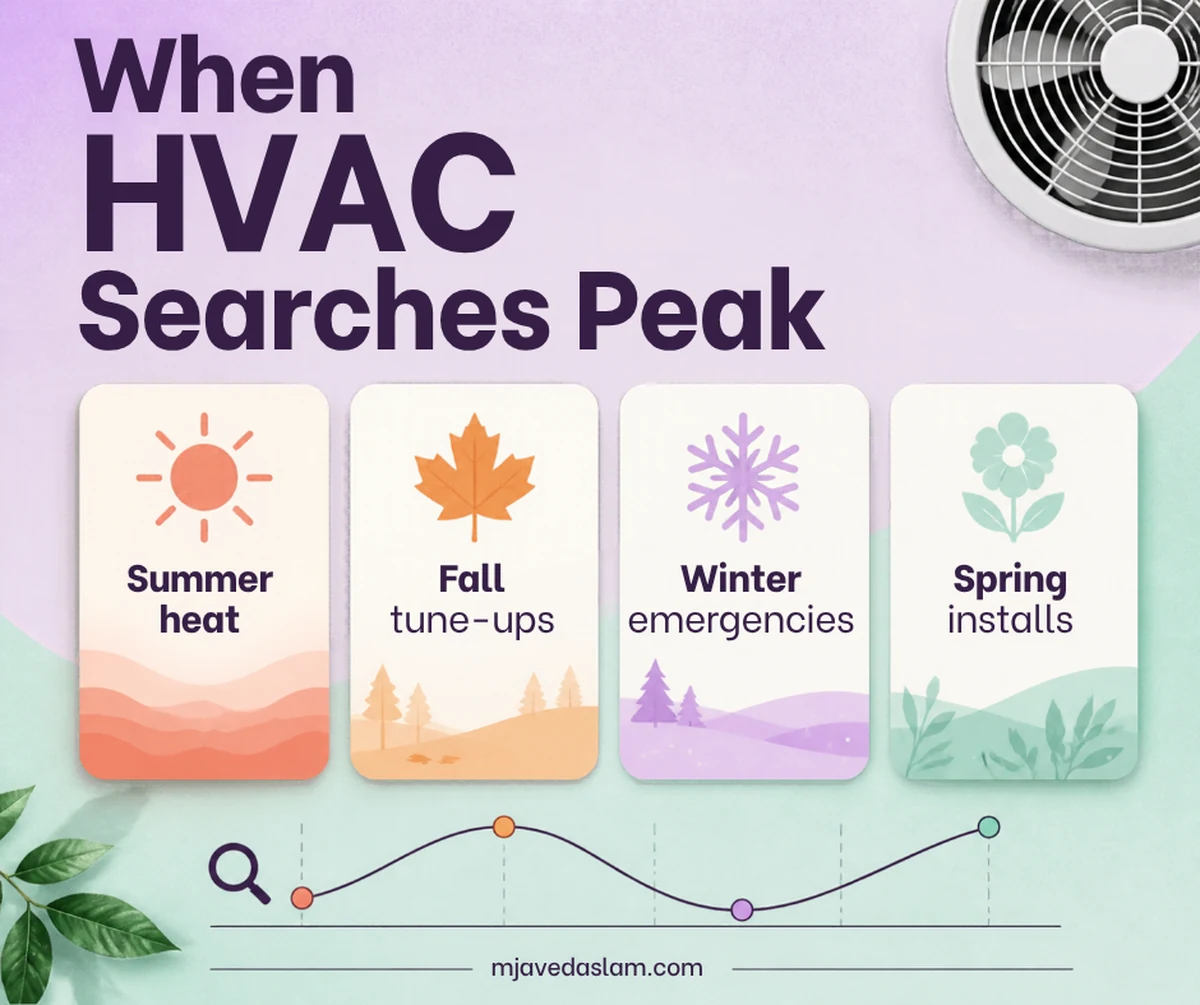
HVAC searches swing with weather. Emergency repair queries spike in heat waves and cold snaps; maintenance and install queries fill the shoulder seasons. Your SEO system should flex with that reality: profile categories and services that match the jobs you want, landing pages ready before the mercury moves, and a review habit that doesn’t sleep when the trucks are slammed.
Here’s the playbook I use with HVAC contractors — distinct from the plumber checklist, because dual heating/cooling demand and seasonal campaign timing change the priorities.
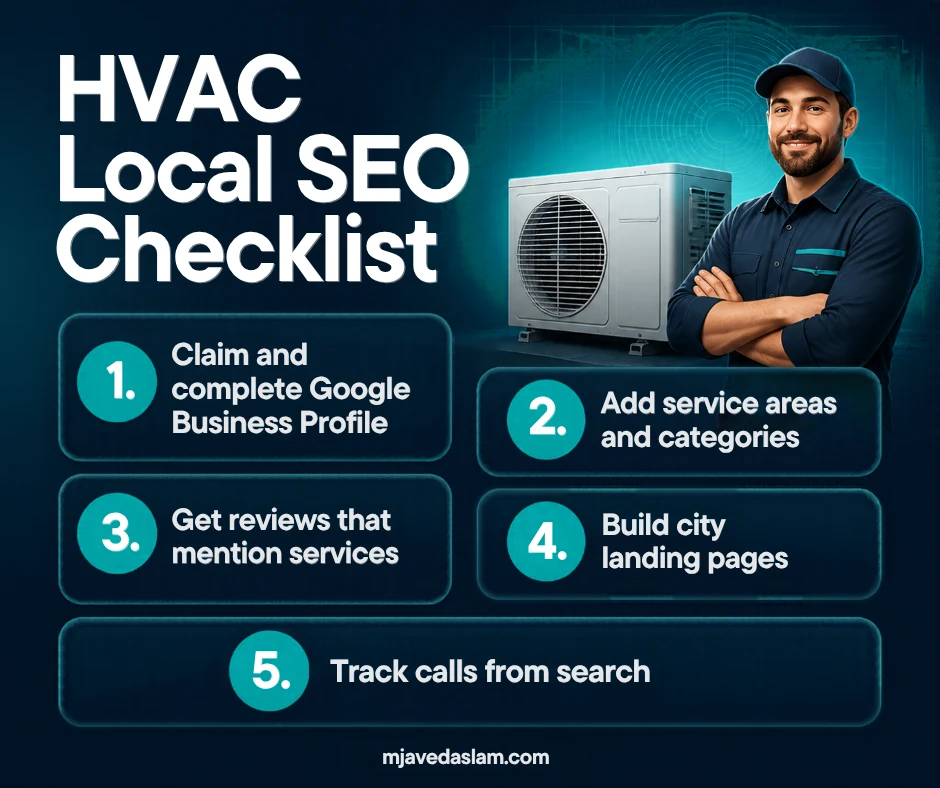
Local SEO for HVAC: emergency + seasonal checklist
- Verify one clean profile — Fix duplicates first (duplicate Business Profile guide). Claim path: claim Google Business Profile.
- Primary category: Usually “HVAC contractor.” Add secondaries you truly offer (Air conditioning repair service, Furnace repair service, Heat pump sales — only if accurate).
- Services list: AC repair, furnace repair, heat pump install, duct cleaning, maintenance plans — written in homeowner language.
- Hours + emergency notes: If you offer after-hours dispatch, say so clearly in the profile description and on the site. Keep holiday hours updated before the holiday.
- Photos: Branded vans, thermostat upgrades (permission), outdoor units, team in uniform — not only stock warehouses.
- Reviews year-round: Ask after every completed job; reply to all. QR/link workflow: Google review QR code.
- Seasonal pages ready early: “AC tune-up,” “furnace inspection,” “heat pump vs furnace” — published before the rush, not during it.
- Emergency page: One clear “AC/furnace emergency” page with phone above the fold, service area and what to do while you drive over.
- NAP consistency across site, profile and major listings.
- Track calls from Maps vs website vs ads so you know what to fund in July vs January.
Relevance, distance, prominence — HVAC edition
Google’s Help on improving local ranking still centers on relevance, distance and prominence (also described as popularity in the same article). For HVAC:
- Relevance: Categories and services that match “AC recharge,” “no heat,” “mini split install.” Stuffing every HVAC keyword into the business name violates guidelines and confuses matching.
- Distance: Honest service areas. Stretching three states on a profile you can’t cover in a heat wave hurts customers and trust.
- Prominence: Reviews, ratings and web mentions. A steady review stream beats a once-a-year review blitz after a bad storm.
Google also reminds businesses there’s no way to request or pay for a better organic local ranking. Ads are a separate product when you need coverage during peak weeks.
Google Business Profile setup for HVAC contractors
Open Business Profile Manager on desktop when you can. Labels move; use Google’s edit-profile Help if a control renamed itself.
- Business type: Storefront, service-area, or hybrid. Pure mobile techs should follow service-area rules — see service-area Business Profile.
- Description: Residential vs light commercial, brands you service (only if true), maintenance plans, emergency availability.
- Products/services: Maintenance memberships and common SKUs if Google surfaces them for your category — keep prices honest or omit.
- Posts: Short seasonal tips (“filter change before first freeze”) beat vague slogans.
- Messaging: On only if someone answers during stated hours in peak season.
Website pages that catch emergency and planned demand
HVAC sites fail when everything dumps into one “Services” blob. Split intent:
- Emergency repair pages — AC failure / no heat. Giant click-to-call, cities served, triage tips, license/insurance notes if accurate.
- Install / replace pages — heat pumps, furnaces, central AC. Explain process, timelines, what affects quotes (without fake “average prices” you can’t defend).
- Maintenance / tune-up pages — shoulder-season workhorses.
- Brand or system pages — only for lines you actually sell/service.
- Area pages — only with unique details (climate quirks, housing stock). No spun paragraphs.
Internal links from the homepage to emergency and seasonal hubs help both users and crawlers. Technical clarity (including clean LocalBusiness schema in WordPress) supports the entity; it doesn’t replace the profile.
Seasonal operating rhythm
| Season | Search bias | SEO focus |
|---|---|---|
| Late winter / early spring | Furnace fatigue, AC prep | Publish tune-up pages; refresh AC repair profile photos |
| Summer peaks | Emergency AC | Protect call tracking; reply to reviews daily; don’t let hours go stale |
| Fall | Heat prep, heat pumps | Furnace inspection content; update holiday hours early |
| Winter peaks | No heat / emergency furnace | Emergency page + dispatch messaging; keep profile open status accurate |
Run light paid search in peaks if organic can’t cover demand — with conversion tracking wired correctly (Google Ads conversion tracking on WordPress) and negatives in place.
Reviews when every truck is on the road
Peak weeks are when reviews matter most and when teams forget to ask. Build the ask into the invoice/SMS template now. Reply templates for angry “still hot in here” reviews: acknowledge, take details offline, never invent timelines you can’t keep. Google encourages responding; incentivized Google reviews remain off-limits.
Weekly HVAC local SEO routine
- Check profile calls, direction requests and website clicks by service.
- Reply to every new review within a day or two.
- Add 2–4 real job photos (permission cleared).
- One profile post when you have a real seasonal tip or hours change.
- Confirm the emergency page phone and tracking numbers still work.
- Monthly: NAP audit on top listings; category/service accuracy check.
That’s local SEO for HVAC companies without the hype: one solid profile, pages matched to emergency vs seasonal intent, reviews that don’t stop in July, and measurement that tells you which channel answered the phone. For implementation help, see local SEO services.
How this differs from plumber local SEO
The bones match any home-service playbook (one profile, relevance, reviews, NAP). HVAC adds sharper seasonal swings and dual heating/cooling intent. Publish and refresh before the weather — don’t wait until the first 100°F day to write an AC emergency page. If you also run plumbing under another brand, keep separate eligible profiles only when Google’s representation rules say they’re distinct businesses — never as a keyword hack.
For a parallel vertical checklist, see local SEO for plumbers. Cross-link only when it helps readers; don’t force unrelated service mashups on one URL.
Finally, keep licensing and insurance claims accurate on both the site and the profile. Invented credentials are a trust and policy problem — not an SEO tactic. When capacity is maxed in a heat wave, update the profile description or posts with realistic response expectations instead of ghosting reviewers.
FAQ: Local SEO for HVAC companies
What is the best Google Business Profile category for HVAC?
Most contractors should use HVAC contractor as the primary category, then add secondary categories only for services they actually perform.
How do HVAC companies rank in the Map Pack?
Google bases local results mainly on relevance, distance and prominence. Complete profiles, realistic service areas and reviews support those factors. You can’t pay for a higher organic Map Pack position.
Should HVAC companies create separate profiles for heating and cooling?
No. List heating and cooling services on one eligible profile. Separate profiles for services of the same business can trigger duplicate issues.
When should HVAC seasonal pages go live?
Before the weather spike — ideally weeks ahead — so pages can be crawled and earn engagement before emergency demand hits.
Do maintenance plans help local SEO?
They help the business and can earn reviews/repeat mentions. SEO impact comes indirectly through relevance and prominence signals, not from the plan name alone.
Is local SEO enough during a heat wave?
Organic Maps demand can exceed capacity. Many companies add Google Ads temporarily while keeping the profile accurate. Track conversions so you know what the ads cost per booked job.