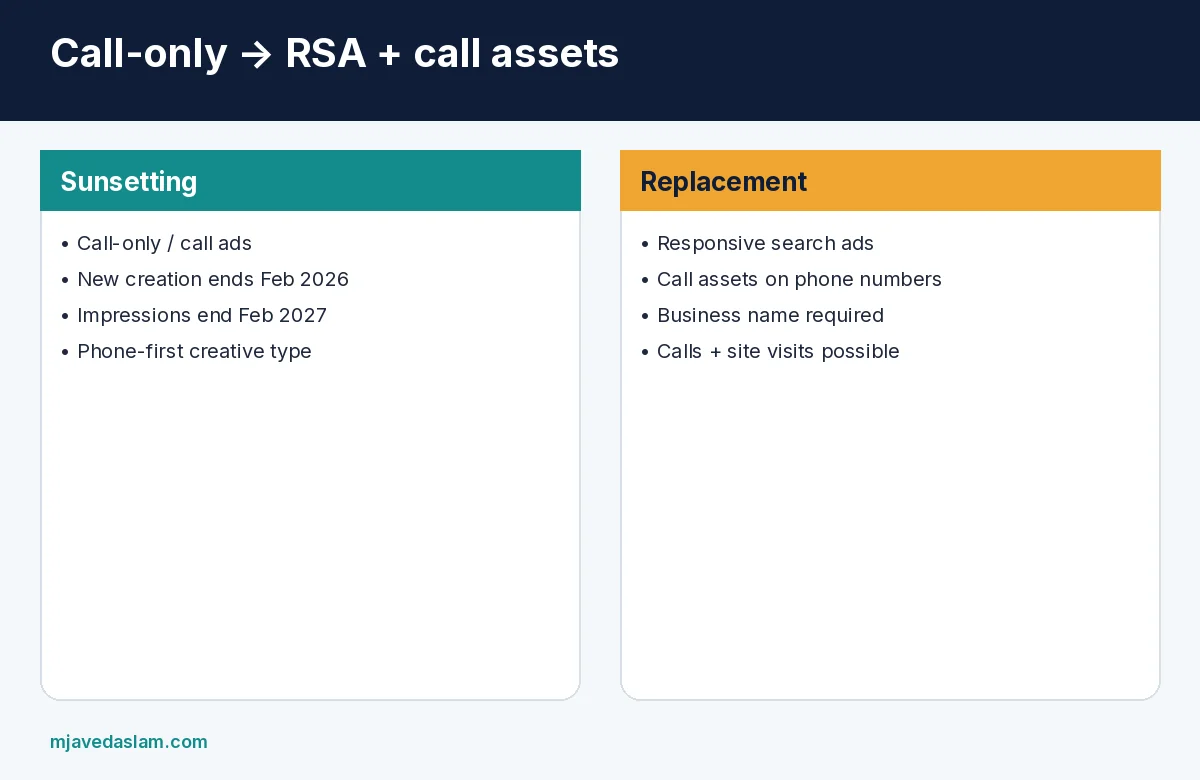
Call assets Google Ads after call-only sunset is the practical path for local businesses that relied on call-only (call) ads: Google is deprecating those ad types, and Help instructs advertisers to move to responsive search ads with call assets so phone leads continue. New call-only ad creation options are removed in February 2026; existing call-only ads stop receiving impressions in February 2027. Migrate before you lose coverage.
This article is the call-ads transition. It is not the general assets/extensions overview alone, remarketing setup, or Search vs Display strategy primer — though those remain related.
Ads support: Google Ads services.
Call assets Google Ads after call-only sunset — quick answer
- Read Google’s “Action required: transition from call ads to call assets” Help — dates above are from that documentation.
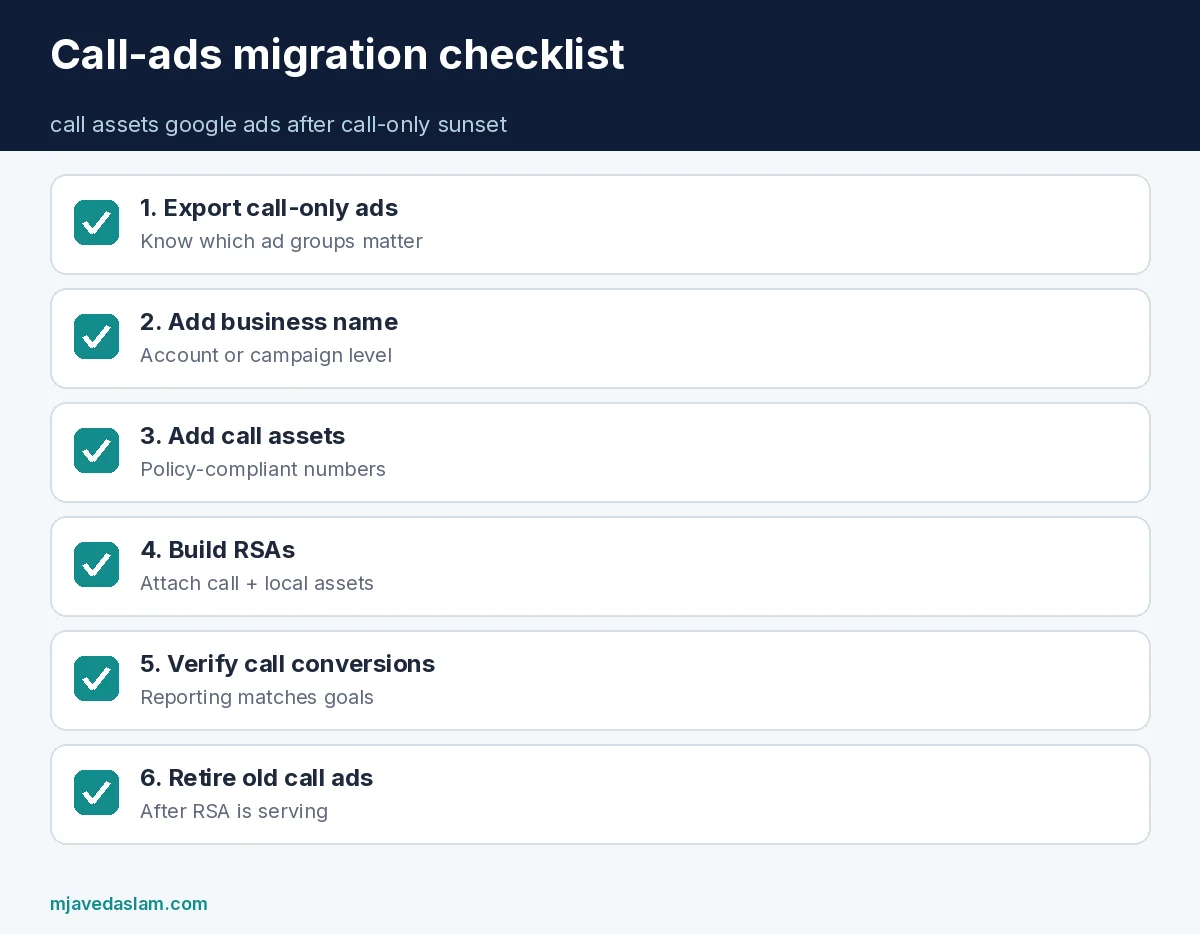
- Add your business name at account or campaign level and add compliant phone numbers as call assets.
- Create or update responsive search ads (RSAs) in the relevant ad groups; attach call assets (via asset options / more asset types as shown in the UI).
- Enable call reporting / conversion counting for calls per your goals so you can measure phone leads.
- After the RSA is approved and serving, remove old call-only ads so budget is not stuck on inventory that will die.
Google’s call assets Help still covers how call assets extend ads with a click-to-call number on eligible devices. Call-only ads historically dialed focus; RSAs + call assets can drive calls and site visits depending on creative and assets.
Why Google is changing call-only ads
Google’s transition articles state call ads are being replaced by responsive search ads with call assets. RSAs use multiple headlines and descriptions so combinations can match queries; attaching call assets keeps phone leads available without a separate call-only creative type. Waiting until February 2027 to think about this is how call volume quietly vanishes.
Step-by-step migration for local accounts
- Inventory: List campaigns still using call-only ads (Ads UI or Editor). Note phone numbers and which ad groups produce calls.
- Business name: Add the business name in account or campaign settings as required for the upgraded experience.
- Call assets: Add phone numbers as call assets; follow phone-number policies and verification requirements in Help. Schedule call assets if after-hours calls are a problem.
- RSAs: Build RSAs with strong local headlines (service + geo honesty), clear descriptions, and final URLs that match the offer. Attach call, location, sitelink, and callout assets: assets for local business.
- Measurement: Confirm call conversions / reporting settings. Site conversions still matter for form leads: conversion tracking.
- Cutover: When RSAs are approved and delivering, pause or remove legacy call-only ads. Do not run conflicting duplicates forever.
RSA + call asset best practices for service businesses
- Keep geo targeting aligned with where crews actually roll — call assets do not fix nationwide clicks you cannot serve.
- Use negatives so job-seekers and DIY queries do not burn the phone: negative keywords.
- Match landing page promises to what the caller hears; bait-and-switch hurts Quality and reputation: Quality Score.
- Staff the phone during ad schedules or use call scheduling / forwarding responsibly.
- Pair Search intent campaigns with a healthy Google Business Profile for organic calls: GBP services.
What about Editor and old checklists?
Google Ads Editor Help for creating call-only ads now carries the same February 2026 / February 2027 warnings. Treat any blog that still says “just make call-only ads” without the sunset dates as outdated. Prefer support.google.com articles dated with the transition notice.
Budget and bidding notes (no invented ROAS)
After migration, watch cost-per-call and conversion actions rather than vanity clicks alone. RSAs may generate site clicks and calls; decide which conversion actions matter in column reporting. Do not assume a universal “calls are always cheaper after RSA” number — Google does not publish a single guaranteed CPA change for this migration. Compare your account’s before/after over a few weeks with stable budgets.
Cost planning context: Ads cost for small business. Channel mix: Search vs Display.
Common mistakes during the sunset
- Ignoring notifications until creation is already blocked.
- Adding call assets but never building RSAs in the ad groups that used to carry call-only ads.
- Using a phone number that fails verification or violates policy.
- Leaving call-only ads active after RSAs work, splitting learning.
- Pointing final URLs at soft 404s or slow pages.
Ops checklist this week
- Filter Ads → Ads for call-only / call ads; export the list.
- Confirm business name + call assets at the right level.
- Ship RSAs in those ad groups with full asset coverage.
- Verify call reporting and conversion actions.
- Schedule a February 2026 reminder to confirm no creation dependency remains; schedule a late-2026 check before the February 2027 impression cutoff.
Agencies should notify clients in writing with the official Help links — sunsets are easy to miss between seasonal promotions.
If most leads are calls, train whoever answers to ask “Did you see our Google ad?” for a week after cutover so you can sanity-check reporting against real conversations — without treating anecdote as a fabricated CTR study.
Emergency and after-hours advertisers should set call asset schedules explicitly; an RSA that calls a closed shop burns budget and trust.
FAQ: call assets Google Ads after call-only sunset
When do call-only ads stop working?
Per Google Ads Help: options to create new call-only ads are removed in February 2026; existing call-only ads stop receiving impressions in February 2027.
What replaces call-only ads?
Responsive search ads with call assets (phone numbers attached as assets), plus related account/campaign requirements such as business name as described in the transition Help.
Are call assets free?
There is no extra fee to add assets themselves; you still pay for eligible clicks/interactions per normal Ads billing. Follow current asset Help for details.
Do I need a final URL now?
RSAs require a final URL. Google’s upgrade materials emphasize landing pages as part of moving away from call-only creatives. Use a relevant service page, not a homepage junk drawer.
Can I keep call-only ads until 2027?
Existing ones may serve until the February 2027 cutoff, but you cannot rely on creating new ones after February 2026. Migrating early avoids a cliff.
Is this the same as call extensions?
“Call extensions” were renamed into the assets framework. Use current call assets documentation; older extension screenshots mislead.
Call assets Google Ads after call-only sunset is a migration project with hard dates — not a creative preference. Build RSAs, attach call assets, measure phone conversions, and retire call-only ads on purpose before Google retires them for you.
After cutover, compare call conversion volume week-over-week with stable budgets before judging RSA performance; mixed creative learning plus seasonality can look like a “failure” that is really noise.
Keep a spreadsheet of forwarding numbers if you use call tracking vendors, and confirm the number shown in call assets still matches what you verified with Google.
If a campaign must pause overnight, use ad schedules and call asset schedules together so you are not paying for clicks that ring a closed shop — a common leak after migrating call assets google ads after call-only sunset.
Tell the front desk the migration date; otherwise they may blame “Google” for call quality changes that are really new RSA messaging they were never briefed on.
International advertisers should confirm the Help dates apply to their account’s surface; always open the linked Google Ads Help articles in the same login you use to advertise.
When rebuilding RSAs, reuse the strongest call-only headlines as RSA pin candidates only when they still match policy and do not over-pin every asset into one rigid ad.
Call-only campaigns that existed mainly for emergency keywords (burst pipe, no heat) should keep those ad groups intact with new RSAs rather than dumping every keyword into one catch-all — intent hygiene still matters after call assets google ads after call-only sunset.
If lead quality drops, check search terms and asset reports before blaming the RSA format; expanded query match without negatives is a separate problem.
Store the official transition URLs in the client’s shared drive so renewals and new hires do not rediscover the sunset from a random YouTube video with wrong years.